21 resources
-
IVOA Table Access Protocol
Welcome to this course about IVOA Table Access Protocol
All levels Basic Computing Skills CourseVideo
-
How to Debug Python Code
In this course, we will teach you the basics of debugging python code (without introducing new bugs)! We will NOT be using debuggers during the webinar introduction and following exercises. A lot of what we will cover is the thought process behind su
All levels Python CourseVideo
-
Introduction to TOPCAT
Introduction to the popular astronomy program TOPCAT. We will cover basics from how to install it on your machine to importing data from VOs and making plots.
All levels Astronomy Software CourseVideo
-
Machine Learning with Keras
This course is purely a collection for the materials from the "Machine Learning with Keras" training course from 2019.
All levels Machine learningPythonWorkshop materials Course
-
Intro to Machine Learning with Python
A basic knowledge of python is assumed for this course. i.e. knowledge of basic data structures, operations and how to write a script. The notebooks have been developed to be compatible with Python 2.7x and 3.x and, may require some Python packages t
All levels Machine learningPython Course
-
Introduction to Python
Python is THE language currently used in astronomy (and many industry fields). It is incredibly versatile and has amazing community support and an impressive number of libraries and packages to make your coding life easier. This course will focus on
All levels Basic Computing SkillsPython CourseVideo
-
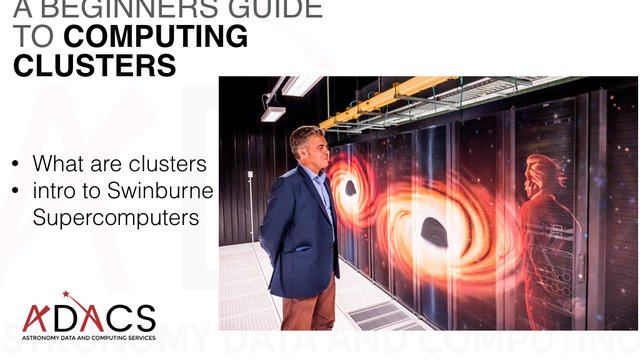
A Beginners Guide to Computing Clusters
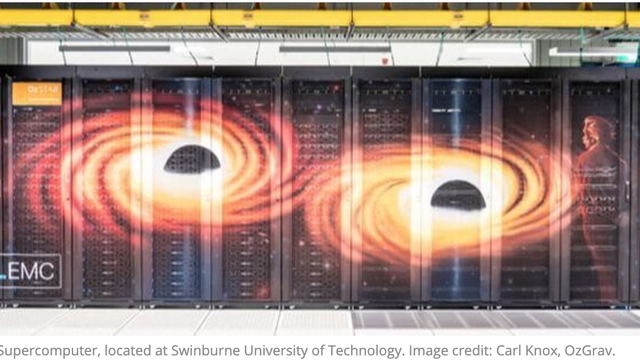
Astronomical research has high computational demands that can be hard to meet with a conventional machine. Computing clusters aim to meet the ever-growing demand. This course provides an overview of what clusters are and how to use the Swinburne supe
All levels Basic Computing SkillsClusters CourseVideo
-
Introduction to SLURM
Slurm is an open-source, fault-tolerant, and highly scalable cluster management and job scheduling system for large and small Linux clusters. It provides three key functions: allocating exclusive and/or non-exclusive access to resources (nodes) to us
All levels Basic Computing SkillsClusters CourseVideo
-
Introduction to Structured Query Language (SQL)
Welcome to an introduction to Structured Query Language (SQL). This course will provide you with a solid foundation of knowledge on relational databases and how to write queries using SQL. The material provided consists mainly of webinar-style videos
All levels Basic Computing Skills CourseVideo
-
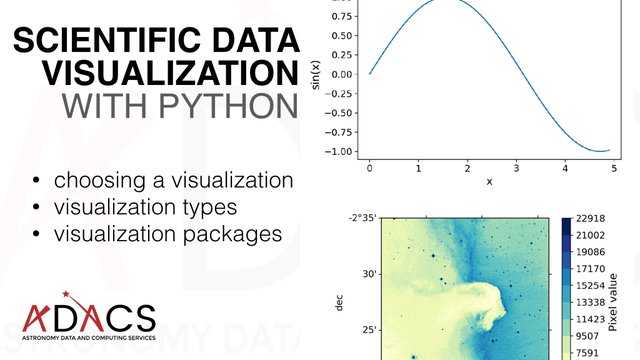
Scientific Data Visualization with Python
Visualization is a key way we interact with data. Displaying complex relationships in graphs and plots rather than looking at purely numerical output helps us understand our data better. It is important to choose the right type of visualization for t
All levels Basic Computing SkillsPython CourseVideo
-
Version Control with Git
Version control is a type of system that allows you to keep track of changes made to your code over time, and swap between them freely. This means you can revert selected files back to a previous state, revert the entire project back to a previous st
All levels Basic Computing Skills CourseVideo
-
Introduction to MPI
Message Passing Interface ( MPI ) is a communication protocol for parallel programming. MPI is specifically used to allow applications to run in parallel across a number of separate computers connected by a network.
All levels ClustersPython CourseVideo
-
Introduction to HDF5
Hierarchical Data Format 5 (HDF5) is a unique technology suite that makes possible the management of extremely large and complex data collections. The HDF5 technology suite includes: A versatile data model that can represent very complex data objects
All levels Clusters CourseVideo
-
Introduction to Astropy
The Astropy Project is a community effort to develop a core package for astronomy using the Python programming language and improve usability, interoperability, and collaboration between astronomy Python packages. The core astropy package contains fu
All levels Astronomy SoftwarePython CourseVideo
-
Introduction to Bash
Day to day work for astronomers and developers is hard to imagine without the use of terminals to navigate through file systems, run programs, and get access to supercomputers. Knowing how to use Bourne Again SHell (BASH) commands and write basic scr
All levels Basic Computing Skills Course
-
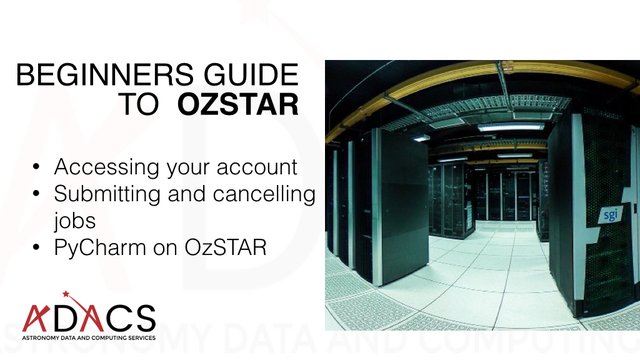
A Beginners Guide to OzSTAR
Many students have found it challenging to determine exactly what they need to do when they want to turn a program they have written into a job to OzSTAR. This tutorial aims to resolve this issue by giving detailed instructions so by the end, even co
All levels Basic Computing SkillsClusters Course
-
Statistics for physical scientists short course
Welcome to the� Statistics for Physical Scientists �short course!� It's designed to give researchers, particularly in the physical sciences, some tips, examples and practice in applying common statistical tools.� The course covers: basic summary stat
All levels Workshop materials Course
-
A Beginners Guide to Flutter
This course will provide an introduction to app development using Flutter. You will learn why you should consider using Flutter for making your own app and the advantages it can bring as well as more focused lessons on key principles such as setting
All levels Basic Computing SkillsWorkshop materials Course
-
Collaborative Software Development
Writing software is an integral component of the research activities of many astronomers. Increasingly, such software is written in collaborative efforts involving multiple researchers across multiple institutions. Despite this, training for astronom
Intermediate Astronomy SoftwarePython Course
-
[Unfinished Course] Virtual environments and package management
Virtual environments and package management
Introductory Python Course
-
Getting Started with OzStar
Webinar on taking your first steps with the OzStar Super computer.
All levels Basic Computing Skills CourseVideo
Showing all 21 resources